Overview of Topics

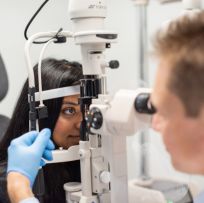
This guide will help you understand myopia as a progressive disease and why early intervention matters for your child’s long-term vision health. You’ll learn about Stellest lenses, a breakthrough FDA-authorized treatment that uses innovative optical technology to slow myopia progression. We’ll cover how the lenses work, what the clinical research shows, who makes an ideal candidate, and what daily life looks like with Stellest. You’ll also find information about treatment monitoring, lifestyle factors that support myopia control, how Stellest compares to other options like MiSight contact lenses and orthokeratology, and what to expect during your comprehensive evaluation at our practice.
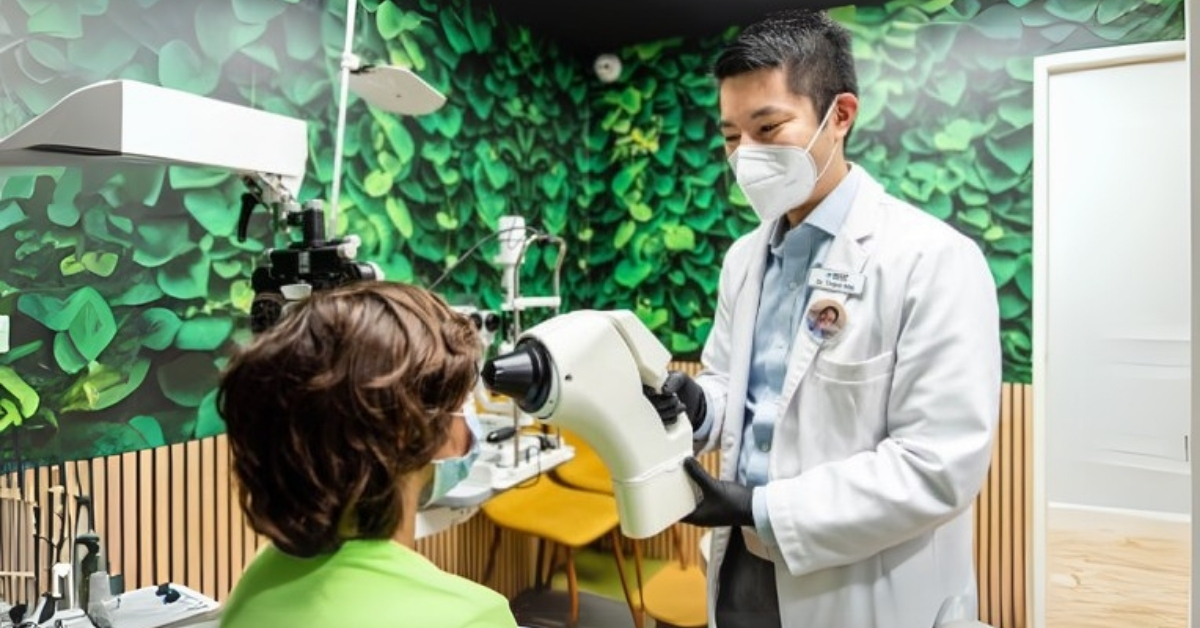
If your child has been diagnosed with myopia, you’re facing more than just blurry vision. Myopia is a progressive eye disease that physically changes the structure of your child’s eyes, and without intervention, it can lead to serious vision complications later in life. The good news is that you have options. Stellest lenses represent the latest breakthrough in myopia management, offering a simple, proven way to help protect your child’s vision for a lifetime.
Schedule Your Complimentary Myopia Consultation
We begin every myopia management journey with a complimentary consultation to assess your child’s individual needs and explore the best treatment options for your family. During this no-cost visit, our Costa Mesa optometrists will evaluate your child’s vision and create a personalized plan tailored to their lifestyle.
We’ve organized the information into the following sections:
Understanding Myopia as a Progressive Disease
What Are Stellest Lenses?
Clinical Efficacy
Who Are Ideal Candidates?
The Fitting Process
Daily Life with Stellest
Monitoring Progress
Combination Therapy and Lifestyle
Comparing Treatment Options
Financial Considerations
Why Choose Our Practice
Taking the Next Step
Understanding Myopia as a Progressive Disease
The Disease Pathway
When most parents think about nearsightedness, they picture thicker glasses every year. But myopia is far more serious than a refractive error that makes distant objects look blurry. It’s a progressive disease that causes the eyeball to elongate abnormally, a process called axial elongation. As the eye stretches longer, the delicate tissues inside, particularly the retina, become stretched and thinned. This physical change creates exponentially higher risks of sight-threatening conditions throughout your child’s life.
While glasses and contact lenses can correct the blurry vision caused by myopia, they do absolutely nothing to address the underlying disease process. Standard single-vision glasses are like putting a Band-Aid on a wound that keeps getting deeper. They help your child see clearly today, but they don’t slow the progression that’s happening inside the eye.
Risk Quantification by Prescription Strength
The risks associated with myopia aren’t abstract or distant. They’re real, measurable, and directly tied to how much myopia your child develops. Understanding these numbers helps explain why early intervention matters so much.
Children with moderate myopia between -3.00D and -6.00D compared to a child with normal vision face 5-13 times the risk of retinal detachment, 10-73 times the risk of myopic macular degeneration, 2-3 times the risk of cataracts, and about 2 times the risk of glaucoma. These aren’t small increases. A child with moderate myopia is 10 times more likely to develop myopic macular degeneration, a leading cause of permanent vision loss.
High myopia greater than -6.00D creates even more alarming statistics. If myopia progresses to severe levels worse than -9.00D, your child faces over 20 times the risk of retinal detachment, substantially increased risk of myopic macular degeneration up to 40 times higher in severe cases, 2-5 times the risk of cataracts, and 2-3 times the risk of glaucoma. These conditions can cause permanent vision loss and may require surgical intervention.
Why Every Diopter Matters
Here’s where hope enters the picture. Research shows that slowing progression by just 1.00 diopter reduces the risk of myopic maculopathy by 40% and retinal detachment by approximately 30%.
This is why myopia management isn’t optional. Waiting is not neutral. Every year without treatment allows the eye to continue elongating, stacking up diopters that translate directly into lifetime disease risk. Early intervention during childhood, when progression is most rapid, is the only way to reduce the total amount of myopia your child develops during their growing years.
What Are Stellest Lenses?
The Technology Behind Stellest
Stellest lenses look like regular glasses, but they incorporate groundbreaking optical technology specifically designed to slow myopia progression. The lens features a clear central zone that provides normal, sharp vision for distance and near tasks. Surrounding this central zone are 1,021 tiny highly aspherical lenslets arranged in 11 concentric rings. These microscopic lenslets are the key to Stellest’s effectiveness.
The technology is called H.A.L.T., which stands for Highly Aspherical Lenslet Target. These 1,021 lenslets create a controlled volume of light in front of the retina rather than behind it. When light focuses behind the retina, it sends a signal to the eye to grow longer, which worsens myopia. By creating this specific light pattern in front of the retina, Stellest lenses send a biological signal to the eye to slow down its elongation.
Your child looks through the clear central zone for all everyday activities, so their functional vision remains completely unaffected. They won’t see rings, halos, or notice the lenslets at all. The technology works continuously in the background, helping manage myopia progression while your child reads, plays, attends school, and participates in sports.
A Historic FDA Milestone
In September 2025, Stellest lenses received FDA authorization, representing a landmark moment in myopia management. These are the first FDA-authorized eyeglass lenses specifically designed to help slow myopia progression in children. This authorization followed rigorous clinical trials demonstrating both safety and efficacy.
When discussing Stellest with other parents or researching online, you’ll want to use accurate language. These lenses are FDA-authorized, and they help slow myopia progression. Myopia management aims to significantly reduce progression rather than completely stop it or cure it. Setting realistic expectations is important for long-term treatment success.
Clinical Efficacy
The U.S. Clinical Trial
The evidence supporting Stellest lenses comes from a rigorous U.S. randomized, double-masked clinical trial involving children aged 6 to 12 years at the start of the study. This type of research design is the gold standard in medical research because it eliminates bias and allows researchers to measure true treatment effects.
The results were impressive. Over two years, children wearing Stellest lenses showed 71% less refractive progression compared with children wearing standard single-vision lenses. Even more importantly, Stellest wearers experienced 53% less axial elongation. Remember, axial elongation is the physical lengthening of the eyeball that drives all the disease risks we discussed earlier.
What does 71% reduction mean in practical terms? If a child would typically progress by 1.00 diopter per year without treatment, Stellest could reduce that to approximately 0.30 diopters per year. Over five years of childhood growth, that’s the difference between accumulating 5.00 diopters versus 1.50 diopters. That difference of 3.50 diopters could mean the difference between moderate myopia and high myopia, dramatically reducing lifetime risk of vision-threatening complications.
Comparative Effectiveness
One of the most important things to understand about myopia management at our practice is that all four treatment modalities, Stellest, MiSight contact lenses, orthokeratology, and low-dose atropine, are proven, evidence-based premium options. While clinical efficacy varies among these treatments, the best choice depends on your child’s specific age, maturity level, lifestyle, prescription, and your family’s preferences rather than efficacy alone. The best choice depends on your child’s specific age, maturity level, lifestyle, prescription, and your family’s preferences.
Stellest lenses deliver 71% reduction in refractive progression and 53% reduction in axial elongation. MiSight 1 Day contact lenses show 59% reduction in refractive progression and 52% reduction in axial length growth over three years. Orthokeratology provides 36% to 56% reduction in progression depending on the specific study. Low-dose atropine demonstrates 50% to 60% reduction in progression.
The choice among these options comes down to practical considerations. Stellest offers spectacle simplicity without requiring your child to handle contact lenses. MiSight provides freedom from glasses for sports and social activities. Orthokeratology is worn overnight, giving daytime freedom from any vision correction. Atropine is a pharmacological approach using nightly eye drops. Our eye care team will help you determine which treatment best fits your child’s needs.
The Importance of Wear Time
Stellest’s impressive efficacy numbers are based on consistent daily wear. Wear time is not optional—it’s directly tied to treatment effectiveness. The clinical trial data showing 71% reduction in progression and 53% reduction in axial elongation reflects children who wore their Stellest lenses consistently throughout the day.
Families should aim for at least 10 hours per day, 6 days per week, though longer daily wear is associated with better outcomes. Many practices recommend targeting 12 or more hours per day for maximum effect. Think of wear time like taking medication. Missing doses reduces effectiveness.
Consistency matters more than perfection. If your child occasionally forgets their glasses or misses a day, don’t panic. Focus on establishing strong routines and habits over weeks and months. Our eye care team can provide wear-time trackers and help establish reminder systems to support your family’s compliance.
Who Are Ideal Candidates?
The Fitting Process
Comprehensive Measurements
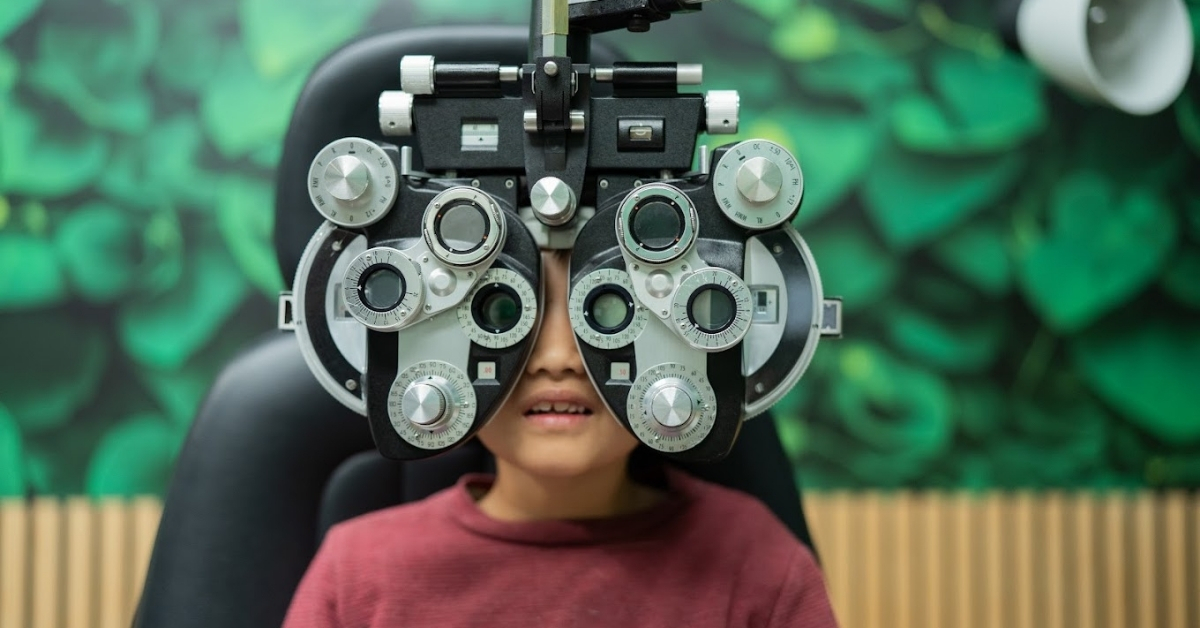
Fitting Stellest lenses isn’t like ordering regular glasses online. These lenses require precise measurements to ensure the optics align correctly with your child’s eyes. Proper alignment is critical for both clear vision and effective myopia control.
Our eye care provider will take monocular pupillary distances, measuring the distance between each pupil individually rather than using a single measurement for both eyes. We’ll measure pupil-center heights to determine the vertical positioning of the optical centers. These measurements ensure your child looks through the correct zone of the lens for optimal performance.
Frame selection is more important than you might think. Frames need near-zero pantoscopic tilt and minimal wrap angles to maintain proper optical alignment. Back vertex distance, the space between the back surface of the lens and the front of the eye, should be kept under approximately 12 millimeters.
These technical details might sound overwhelming, but our eye care team handles all of this. Your job is simply to help your child select frames that fit comfortably and that they’ll want to wear consistently.
What to Expect at Your Fitting Appointment
Come prepared with your child’s current glasses if they have them, along with any prior prescription records or reports from previous eye care providers. The appointment typically includes comprehensive eye examination, precision measurements for the lenses, frame selection and fitting, education about proper lens care and wear-time routines, and scheduling follow-up visits.
Having questions written down beforehand ensures you get all the information you need to feel confident about beginning myopia management treatment. Don’t hesitate to ask about anything that concerns you, from insurance coverage to sports participation to daily care routines.
Daily Life with Stellest
Monitoring Progress
Follow-Up Schedule
Myopia management isn’t a one-time treatment. Ongoing monitoring is essential to track your child’s progression and verify treatment effectiveness. Typical follow-up schedules include comprehensive evaluations every six months.
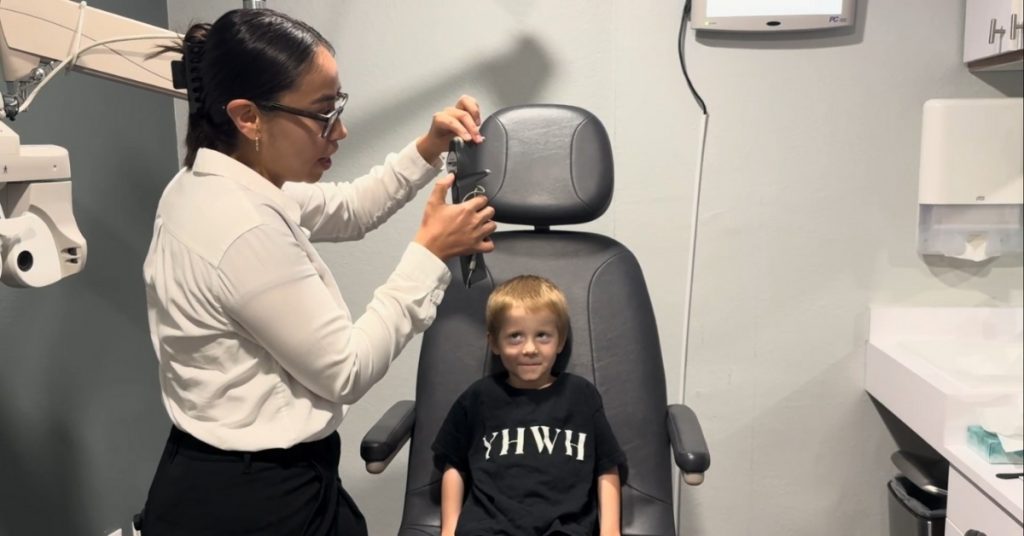
During these visits, we check visual acuity to see if the prescription needs updating, assess the health of the eyes with comprehensive examination, and measure axial length when indicated. Axial length measurement tracks the physical elongation of the eyeball, which is the key factor in myopia progression and associated disease risks.
These regular check-ups allow us to verify that Stellest is working effectively for your child. If progression is occurring faster than expected despite good compliance, we might discuss adjusting the treatment plan, such as adding low-dose atropine or considering combination therapy.
Understanding Treatment Goals
Setting realistic expectations helps avoid frustration. Clear vision is immediate. Your child will see clearly for distance and near tasks as soon as they put on their Stellest lenses, just like with regular prescription glasses.
However, the progression-slowing effect is measured over months and years, not days or weeks. You won’t see results in the same way you see results from antibiotics clearing an infection. Myopia management is a long-term treatment approach aimed at reducing the total amount of myopia your child develops during their growing years.
We track changes in prescription strength and axial length at six-month intervals to document how well treatment is controlling progression compared to expected natural progression rates. Some prescription change is expected and normal even with successful myopia management. The goal of Stellest is not to prevent all progression but to significantly slow it compared to what would occur without treatment.
When monitoring shows that your child’s prescription has changed enough to warrant an update, new Stellest lenses will be prescribed with the updated power. The fact that progression is occurring more slowly than it would naturally demonstrates treatment effectiveness. We’ll compare your child’s actual progression to age-matched norms to quantify the benefit they’re receiving from treatment.
Adjusting Treatment Over Time
Treatment approaches can be adjusted based on changing circumstances, preferences, or treatment response. Some children start with Stellest lenses and later transition to contact lens options as they mature and become ready for lens handling. Other children may begin with contact lenses and switch to Stellest if compliance becomes challenging.
If one treatment is not providing adequate control of progression, we may recommend trying a different modality or adding combination therapy. The flexibility to personalize treatment over time is one of the strengths of comprehensive myopia management programs.
Combination Therapy and Lifestyle
When One Treatment May Not Be Enough
Sometimes combination therapy is recommended for children with rapid myopia progression or inadequate response to a single treatment modality. In select cases, your doctor may consider adding low-dose atropine eye drops to Stellest lens wear, or potentially combining with other approaches.
The decision to use combination therapy depends on factors including your child’s age, current prescription, rate of progression, growth patterns, and adherence to treatment. Combination approaches aim to maximize myopia control effectiveness for children at highest risk of developing high myopia and its associated complications.
Lifestyle as Foundation
No optical or pharmacological treatment works in isolation. Lifestyle modifications work synergistically with Stellest lenses to maximize myopia control. Think of Stellest as the foundation, and healthy visual habits as the framework that supports it.
Comparing Treatment Options
Financial Considerations
Understanding the Cost Framework
The conversation about Stellest cost works best when we shift from thinking about price to considering the value of prevention. The cost of myopia management today prevents potentially much greater expenses in the future.
High myopia significantly increases the lifetime risk of requiring surgical interventions for retinal detachment, treatment for glaucoma, cataract surgery at younger ages, and management of myopic macular degeneration. Retinal detachment surgery can cost tens of thousands of dollars. Ongoing glaucoma treatment requires lifelong medication and monitoring. These expenses add up.
Beyond financial costs, these conditions can cause permanent vision loss and profoundly reduced quality of life. Imagine your child at age 40 facing retinal detachment surgery with uncertain outcomes. Imagine them struggling to work, drive, or enjoy activities because of vision loss from myopic macular degeneration. These scenarios aren’t meant to frighten you—they’re meant to help frame myopia management as the preventive investment it truly is.
Investing in proven myopia control treatment during childhood, when progression is most rapid, protects your child’s eye health across their entire lifetime. Early intervention is the only way to reduce the total amount of myopia your child develops during their growing years. You cannot go back in time and undo diopters that accumulated during untreated childhood years.
Insurance and Financing Options
Insurance coverage for Stellest lenses varies significantly depending on your specific plan. Many vision insurance plans provide some coverage for frames and lenses, though specialty myopia control lenses may or may not be fully covered. Some medical insurance plans may provide coverage when myopia management is documented as medically necessary treatment to prevent disease progression.
We’ll review your insurance benefits, explain what portion may be covered, and discuss out-of-pocket costs transparently. Many families are able to use Health Savings Accounts or Flexible Spending Accounts for myopia management expenses, which allows payment with pre-tax dollars and effectively reduces the cost.
We offer financing options or payment plans to make myopia management more accessible for families. Some practices offer myopia management programs with bundled pricing that includes the initial evaluation, lenses, follow-up visits, and axial length monitoring for a set fee. Ask about all available options during your no-charge myopia evaluation.
We can also discuss warranty policies and remake coverage for growing children who may need updated prescriptions or replacement lenses before the typical replacement cycle. Understanding these details upfront helps you budget appropriately and avoid surprises.

Why Choose Our Practice
Clinical Leadership and Experience
Our practice brings together internationally recognized leaders in pediatric myopia control. Families travel from across the globe to receive myopia management at our clinic, establishing unparalleled credibility in the field.
Our clinical team includes Fellows of the Scleral Lens Education Society, American Academy of Optometry, and other prestigious professional organizations. Dr. Thanh Mai, OD, FSLS, FIAOMC serves on the Treehouse Eyes Leadership Team, bringing national-level expertise to every patient interaction. These credentials represent thousands of hours of specialized training and clinical experience in myopia management.
We offer comprehensive training in all four myopia management modalities: Stellest, orthokeratology, MiSight, and atropine. This breadth of expertise means treatment recommendations are truly individualized rather than pushing patients toward whatever the practice happens to offer.
Comprehensive, Individualized Approach
Our philosophy centers on customization over hierarchy. All four treatments, Stellest, orthokeratology, MiSight, and atropine, are proven, evidence-based premium options with distinct advantages The best treatment depends on your child’s unique circumstances, not on which option generates the most revenue for the practice.
Comprehensive evaluation determines the best fit for each child. Access to all proven modalities means flexibility to adjust treatment as children grow. Combination therapy is available for rapid progressors who need maximum control. Axial length monitoring provides precise progress tracking. A dedicated Myopia Management Care Coordinator supports families throughout the treatment journey.
This comprehensive approach recognizes that children change as they grow. A six-year-old who needs Stellest today might transition to MiSight contact lenses at age nine when they’re ready for the responsibility. A child experiencing rapid progression despite good compliance with one modality might benefit from adding atropine. We have the expertise and resources to support these transitions smoothly.
The Highest Rated Advanced Eye Care Center In Orange County

What Our Patients are Saying
“Excellent staff and doctors. Very thorough with whatever testing you may need to get the best diagnosis possible. They answer all your questions and use advanced methods for the best possible result. Highly recommend.”
⭐⭐⭐⭐⭐
Rafael O.
“Hi Insight vision has great customer service staff n the best optometrist Ive ever seen Dr Nathan Schramm spends as much time as needed n has the highest advanced technology. I highly recommend this practice for anyone with any vision problem”
⭐⭐⭐⭐⭐
Nancy B.
Taking the Next Step
What to Expect at Your Evaluation
We offer a no-charge myopia evaluation, a comprehensive assessment valued at approximately $150 to $250. This evaluation includes complete eye health examination to check for any underlying conditions, comprehensive refraction to determine the exact prescription, axial length measurement to establish baseline eye length for tracking, binocular vision assessment to evaluate eye coordination, risk factor evaluation examining family history and visual environment, discussion of all four treatment modalities with pros and cons of each, personalized treatment recommendation based on your child’s specific needs, and opportunity for questions and answers in a no-obligation consultation.
This evaluation provides everything you need to make an informed decision about myopia management for your child. There’s no pressure to commit immediately. Take time to discuss options as a family, review insurance coverage, and prepare for beginning treatment when you’re ready.
Scheduling Your Appointment
Contact us at (714) 942-1361 to schedule your no-charge myopia evaluation. You can also speak with our Myopia Management Care Coordinator for a complimentary phone consultation if you have questions before scheduling the evaluation.
Bring your child’s current glasses and any prior prescription records if available. Prepare questions to ensure you feel confident in your treatment decision. Write them down so you don’t forget anything during the appointment.
Contact us at (714) 942-1361 to schedule your no-charge myopia evaluation. You can also speak with our Myopia Management Care Coordinator for a complimentary phone consultation if you have questions before scheduling the evaluation.
Bring your child’s current glasses and any prior prescription records if available. Prepare questions to ensure you feel confident in your treatment decision. Write them down so you don’t forget anything during the appointment.
Remember that early intervention provides maximum benefit. Every year of delay costs diopters of vision. Myopia progression doesn’t pause while you’re deciding what to do. This is the window of opportunity to protect your child’s future eye health. The decisions you make now will influence their vision and quality of life for decades to come.

Protecting Your Child’s Vision
Childhood myopia is more than an inconvenience that requires glasses. It’s a progressive eye disease that physically changes the structure of your child’s eyes and creates exponentially higher risks of sight-threatening complications throughout their life. Without intervention, progression continues unchecked, stacking up diopters that translate directly into increased lifetime risk of retinal detachment, myopic macular degeneration, glaucoma, and cataracts.
Stellest lenses represent a proven, FDA-authorized solution backed by rigorous clinical research. With 71% reduction in refractive progression and 53% reduction in axial elongation, Stellest offers significant protection while maintaining the simplicity and familiarity of eyeglasses. Your child wears them just like regular glasses, but they’re working continuously to slow the disease process.
Combined with healthy visual habits, particularly 90 to 120 minutes of outdoor time daily, Stellest provides comprehensive myopia management. Natural light triggers dopamine release in the retina, creating a biological signal that helps slow eye elongation. Stellest plus outdoor time plus appropriate screen habits gives your child the best possible chance of reaching adulthood with lower myopia and reduced disease risk.
You have the opportunity during your child’s critical growing years to change their visual trajectory. Waiting is not neutral. Every month without treatment allows progression to continue. But with early intervention, consistent treatment, and ongoing monitoring, you can significantly reduce the total amount of myopia your child develops and protect their vision for a lifetime.
Schedule your child’s no-charge myopia evaluation today. Speak with our Myopia Management Care Coordinator at (714) 942-1361 to begin the conversation. This is your window to make a difference in your child’s eye health. Let’s protect their vision together.